The Interference Alignment Lesson
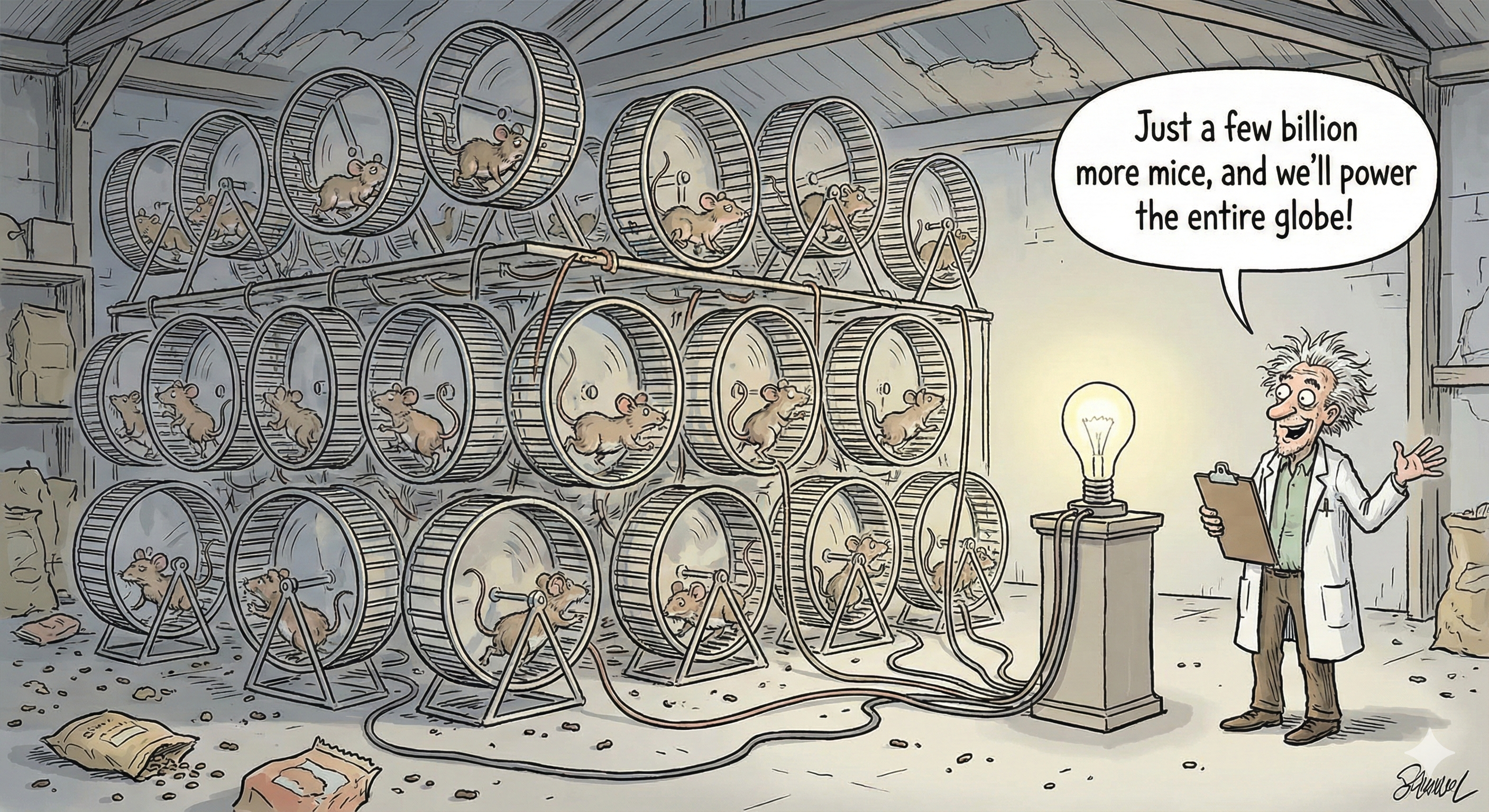
Do you know Interference Alignment? For me, it's a story with a moral that we lived through in the wireless research community almost 20 years ago. A lesson about the gap between mathematical beauty and engineering reality.
In 2008, a seemingly magical idea appeared: even with infinite users, each one could still get half the global spectrum. The math actually worked out. We tried to build it. It worked — at small scale, in the lab. The vibe was: "We just need better engineering."
But reality had other plans. The required accuracy of channel state information grows exponentially with users. At scale, almost 100% of bandwidth becomes overhead just to keep the alignment alive. The system collapsed under its own complexity. Not because the math was wrong, but because engineering details don't just change the constants — sometimes they break the scaling laws entirely.
Since then, whenever I see a beautiful theoretical result with incredible scaling, I first look for the hidden contract: what must stay perfectly aligned? And what does it cost to keep it that way?
Controversial opinion: I think Fault-Tolerant Quantum Computing is the new Interference Alignment. The overhead required to maintain quantum error correction grows so aggressively that I don't believe we'll ever build a quantum computer large enough to do what a classical computer can't. We already have a machine with built-in error correction that scales — it's called a classical computer. I could be wrong. But I've seen this movie before.